

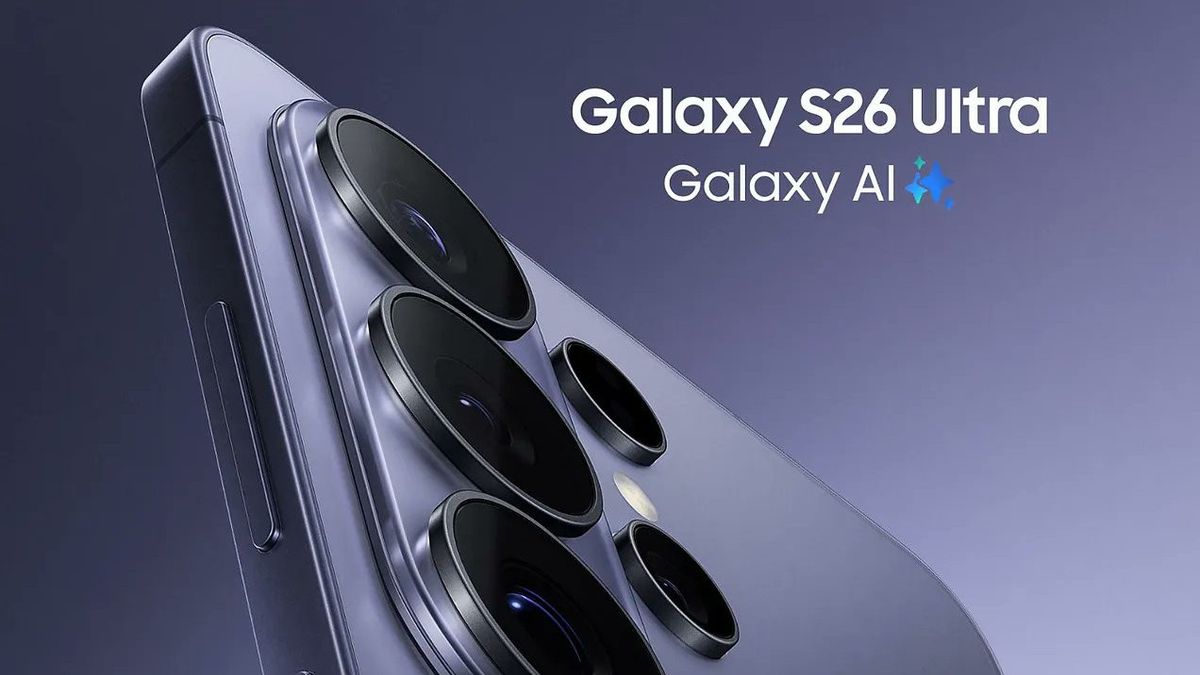
- The full camera system at a glance
- The megapixel myth — and where it holds up
- What actually moved the needle: the f/1.4 aperture
- The ALoP telephoto: a quiet revolution
- Galaxy AI and the software layer
- Real-world performance: where it leads, where it doesn't
- The elephant in the room: is 200MP better than 50MP?
- Should you upgrade?
- Final verdict
Samsung’s flagship Ultra lands with one of the highest-resolution mobile sensors ever built. But with pixel counts that rival medium-format cameras, the real question isn’t how many megapixels you have — it’s what you do with them.
When Samsung announced the Galaxy S26 Ultra at Unpacked in February 2026, the spec sheet read like science fiction. A 200-megapixel primary sensor. An aperture of f/1.4 — the widest ever on a Galaxy flagship. A new All Lens On Prism (ALoP) 5× periscope telephoto. On paper, it sounds like the camera system has leapfrogged every smartphone that came before it.
But megapixels have been a marketing battleground for years, and consumers are right to be skeptical. Does squeezing 200 million pixels onto a phone sensor actually translate into better photos? Or is Samsung selling a number rather than an experience? After weeks of real-world testing and independent analysis, the answer is nuanced — and fascinating.
The full camera system at a glance
The S26 Ultra ships with a quad-camera array that represents an evolution rather than a revolution over the S25 Ultra. Here’s what you’re working with:
| Primary lens | 200MP | f/1.4 · 1/1.3″ sensor · OIS · 23mm eq. |
|---|---|---|
| Ultra-wide | 50MP | f/1.9 · 120° FoV · Dual Pixel PDAF |
| 3 x telephoto | 10MP | f/2.4 · 67mm eq. · PDAF + OIS |
| 5× periscope | 50MP | f/2.9 · 111mm eq. · ALoP · PDAF + OIS |
The headline upgrade is the jump in aperture on the primary sensor — from f/1.7 on the S25 Ultra to f/1.4 here. The 5× telephoto also gains a brighter aperture, moving from f/3.4 to f/2.9. These changes are more meaningful than the megapixel number itself.
The megapixel myth — and where it holds up
Here’s the uncomfortable truth about 200MP: you’re almost never shooting in 200MP. By default, the S26 Ultra fires in 12.5MP mode, using Samsung’s pixel-binning technology to merge 16 pixels into one “super-pixel.” The result is larger effective pixels (from 0.6µm to 2.4µm), better light sensitivity, and reduced noise — exactly what you want for most everyday photography.
So when does 200MP actually kick in? When you deliberately switch to full-resolution mode — useful for large-format prints, heavy post-processing crops, or professional editorial and commercial work. A 200MP shot captured cleanly can be cropped down to 50MP and still retain extraordinary detail. That’s genuinely useful for photographers who work in that space.
For everyone else — social media, WhatsApp, quick memories — shooting at 200MP produces files north of 40–60MB per image, fills storage at an alarming rate, and slows down the camera app. Samsung’s default binning decision is the right one.
What actually moved the needle: the f/1.4 aperture
If megapixels are Samsung’s marketing story, the f/1.4 aperture is its engineering story — and it’s a compelling one. A wider aperture lets in significantly more light (roughly 44% more than f/1.7), which has cascading benefits across the entire imaging pipeline.
Independent testing by DXOMARK found that the S26 Ultra delivers “meaningfully improved” low-light performance over its predecessor, crediting the wider aperture and refined processing for better detail, lower noise, and more stable color rendering after dark. Portrait photography in particular benefits: subjects are cleaner, background separation is more pronounced, and bokeh has a more natural, organic quality.
The ALoP telephoto: a quiet revolution
One of the most technically interesting changes in the S26 Ultra’s camera system is the new All Lens On Prism (ALoP) mechanism powering the 5× telephoto. Previous generations used a traditional periscope lens — a clever but bulky arrangement of prisms and mirrors. ALoP rethinks the optical path entirely, allowing for a more compact form factor without sacrificing focal length or optical quality.
In practice, the results are a more refined zoom experience: cleaner images thanks to improved noise control, more natural color rendering, and better white balance in natural scenes. Samsung also addressed the sporadic telephoto reliability issues that plagued the S25 Ultra, delivering what reviewers describe as a significantly more consistent experience at distance.
However, fine detail capture has slightly decreased compared to its predecessor — a trade-off Samsung appears to have made in favor of overall rendering quality and natural color. For most users, images simply look more “real” and less processed.
Galaxy AI and the software layer
Hardware tells only half the story in 2026. Samsung’s ProVisual Engine and Galaxy AI features do an enormous amount of heavy lifting behind the scenes. The phone processes every frame through on-device neural networks before you even review the shot, adjusting exposure, suppressing noise, sharpening details, and correcting color balance automatically.
Android Central’s extended camera review found that the S26 Ultra’s greatest strength is consistency: “Images are almost always perfectly balanced, with natural colors, accurate lighting, and peppered with fine detail.” This is AI — not megapixels — doing the work. Samsung has publicly stated that spec sheets are becoming less relevant, and their camera strategy backs that claim.
Galaxy AI’s Photo Assist now supports 41 languages as of March 2026, and features like Horizon Lock in Super Steady video mode, Instant Slow-Mo, and the improved portrait processing suite all contribute to a camera system that is genuinely easier to use well, even for non-photographers.
Real-world performance: where it leads, where it doesn’t
| Scenario | Performance | Verdict |
|---|---|---|
| Daylight stills | Excellent detail, natural color, consistent exposure | Outstanding |
| Low light / night | Strong improvement over S25U; noise still noticeable vs. best-in-class | Very good |
| Portrait / bokeh | Improved subject separation, cleaner edges, natural depth | Outstanding |
| Ultra-wide | Autofocus reliability still lags competitors; decent color | Competent |
| 5× telephoto | More consistent than S25U; slightly less peak fine detail | Very good |
| 3× telephoto (post-patch) | Launch bug (blur) fixed in April 2026 update | Very good |
| 4K video | Improved stabilization, color, noise; rivals still ahead in demanding conditions | Very good |
| Sports / broadcast | Used commercially at SLS skateboarding events and 2026 Winter Olympics | Professional grade |
The elephant in the room: is 200MP better than 50MP?
For the vast majority of users, the answer is: not in the way you think. The 200MP sensor’s real advantages have nothing to do with printing 200-megapixel photos. They are: (1) the ability to bin pixels aggressively into larger, more light-sensitive units; (2) computational headroom — the camera can use portions of the full-resolution sensor for lossless digital zoom; and (3) professional flexibility for users who shoot RAW and want maximum crop latitude.
The honest comparison isn’t “200MP vs 50MP” — it’s “large sensor with sophisticated binning vs small sensor with no binning.” In that framing, Samsung’s approach makes sense. The f/1.4 aperture and the sensor size (1/1.3″) matter far more to daily image quality than the pixel count printed on the spec sheet.
That said, the S26 Ultra is not the undisputed king of mobile photography. Both the iPhone 17 Pro Max and the Google Pixel 10 Pro XL maintain measurable advantages in specific areas — particularly ultra-wide autofocus and peak noise performance in extreme low light. The gap has narrowed considerably, but it hasn’t closed.
Should you upgrade?
If you’re coming from an S25 Ultra, the camera improvements alone probably don’t justify the cost. The f/1.4 aperture is a genuine, meaningful upgrade in low light and portrait scenarios, and the ALoP telephoto is a clever engineering achievement — but the overall experience is evolutionary, not revolutionary.
If you’re coming from an S23 Ultra or older, the jump is substantial. Three generations of sensor improvements, AI enhancements, aperture widening, and computational photography refinements have compounded into a genuinely different camera experience.
And if you’re a content creator, videographer, or power user who needs reliable broadcast-quality output from a device that fits in a pocket — the S26 Ultra’s deployment at the 2026 Winter Olympics opening ceremony and SLS skateboarding events speaks for itself.