


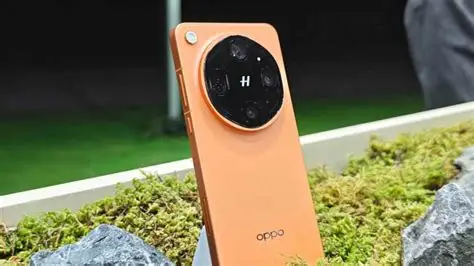
Oppo’s top-end flagship smartphone has gone global for the first time, and we didn’t have to wait any longer than the Chinese market to get it.
Global still implies select markets, but the Find X9 Ultra is ready to compete with the big guns, such as Samsung, Google, and Apple.
It costs £1,449, which is comparable to several rivals for the same storage capacity, such as the Galaxy S26 Ultra. It wants to be the best phone for photography money can buy, thanks to an impressive set of cameras developed in conjunction with Hasselblad.
It’s no slouch in other areas, too, with a large battery, quick charging, a brilliant screen, a unique design, and plenty more to offer.
I’ve been testing it for the past two months to see whether it’s the best phone of 2026.
Design & Build
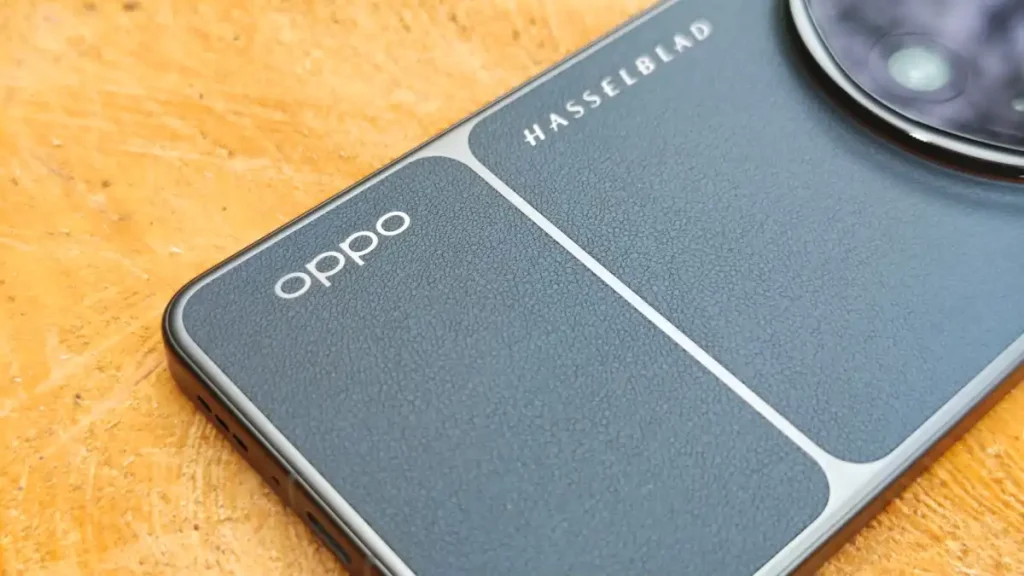
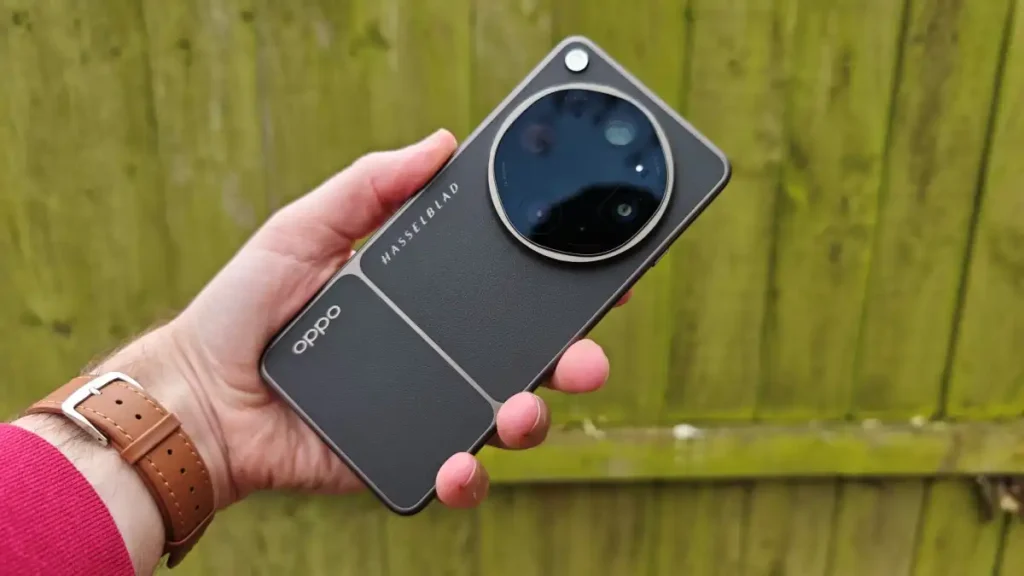
Let me begin by saying that the Find X9 Ultra is my favorite phone design this year, and possibly the last several years. In any case, the Tundra Umber model is really lovely, and it looks much better in person.
With so many dull, cookie-cutter phones hitting the market every week, it’s refreshing to see something new and unique. No one will mistake this for an iPhone 17 Pro Max, or most other phones.
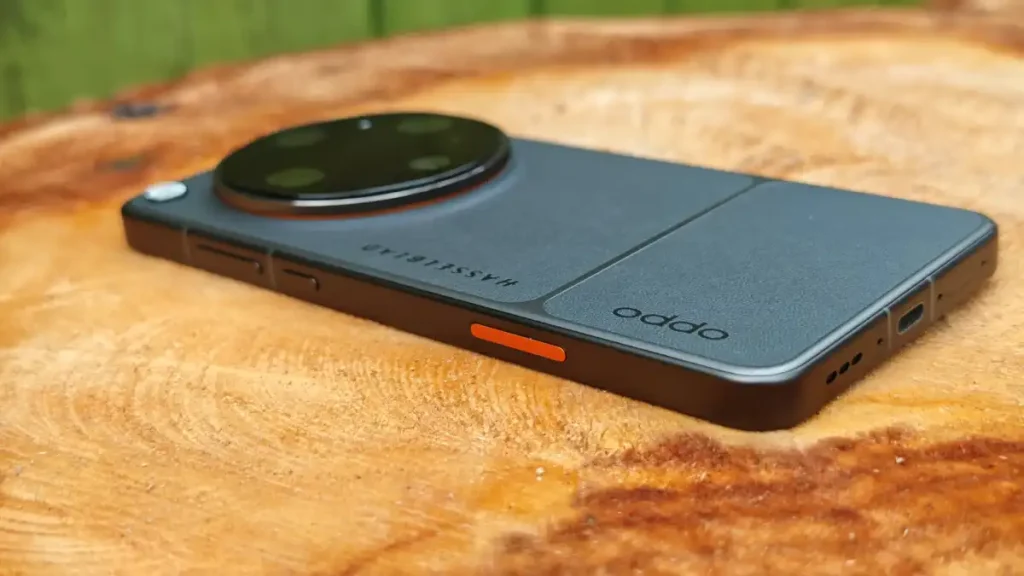
The aluminum frame is elegant and durable, but the vegan leather is the true standout here. It looks wonderful (for some reason, I love how it’s divided into two halves) and gives off a tactile, premium sense. The phone is inspired by a classic Hasselblad camera, which shows through brilliantly, with a bright orange button on the side and a matching ring surrounding the camera module.
For my money, the Find X9 Ultra takes the crown
If you like (reader, you are most likely lot younger than I am), there is an Orange Canyon colorway – it appears that everyone needs to emulate the iPhone in some fashion.
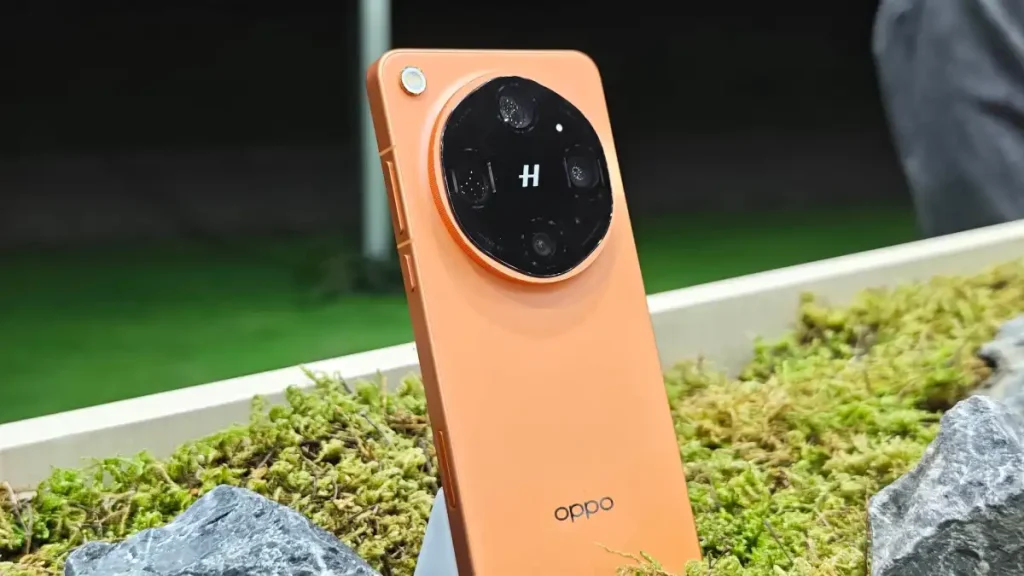
This model has a fiberglass back, and in person (I saw it at the China launch event), the sand dune look is extremely slight, and it simply does not feel as premium. However, if you prefer a loud, vivid design, go for it.
It’s also significantly thinner and lighter thanks to the rear cover material, but it’s still a large, heavy phone. You should expect this from a high-end Ultra device with this level of camera and battery technology, but I believe it is well-balanced in terms of weight.
With main competitors being more basic, samey, or simply dull, the Find X9 Ultra wins my vote (in Tundra Umber).
Screen & Speakers
The Find X9 Ultra’s screen is slightly smaller than rivals such as the Xiaomi 17 Ultra and iPhone 17 Pro Max, but it remains large, as is common for an Ultra-level flagship. If you require anything that can be used one-handed, you’ll need to go elsewhere.
I have quite large hands, which may have contributed to how much I like using this phone’s display, which is one of the greatest in terms of quality. It may not be the absolute finest in any given category – bezel thickness, brightness, refresh rate, etc. – but it has a lot to offer.
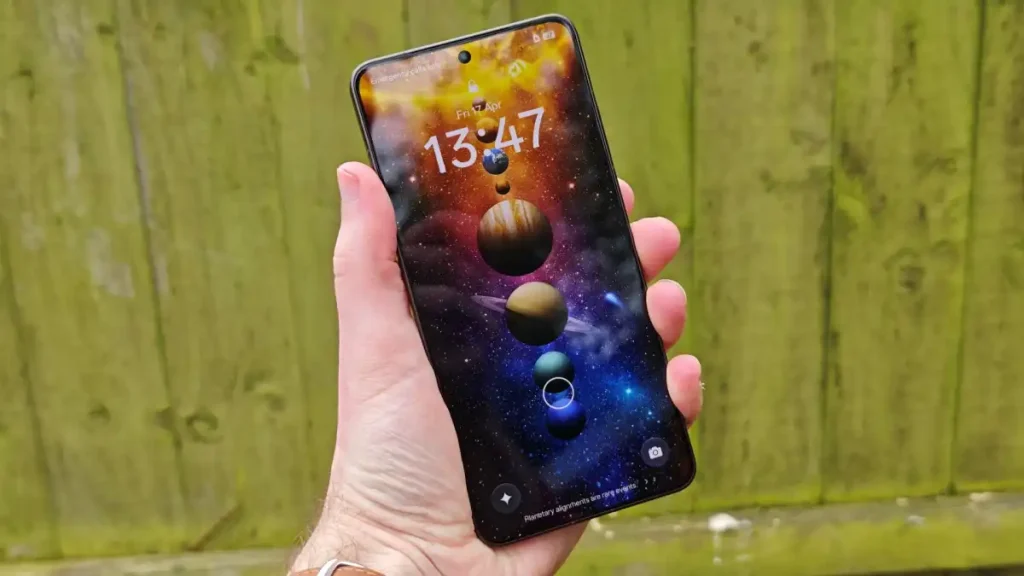
It’s incredibly crisp (even at’standard’ resolution rather than full 1440p), vibrant, fluid, and everything you’d expect from a phone this expensive. If you enjoy tinkering, there are other additional options available, including eye care, adaptive tone, and video color enhancement.
It also has one of the greatest in-screen fingerprint scanners I’ve ever used, with a lovely ripple animation.
Oppo stands out from its competitors in terms of audio. There are stereo speakers, although they are not entirely dependant on the earpiece used to take calls. Some sound still comes from there, but there are holes in the metal frame on top, just as there are at the bottom.
Overall, the sound is nothing short of epic: sharp, clear, and rich, with plenty of volume without having to turn it up to the maximum.
Specs & Performance
I won’t hold you here long because, as you’d expect from a high-end phone, the flagship Qualcomm Snapdragon CPU delivers silky smooth operation.
There’s only one variant with 12GB of RAM and 512GB of storage. At least such is the case in the UK, however other markets may offer more possibilities.
I’ve had no complaints about how fast and responsive the phone is in everyday use. However, it does have a thermal issue, which means it can become pretty hot, especially if you use the camera frequently.
Despite this, it never appeared to create any apparent slowdowns, but the difference between rivals is evident in various benchmark tests, particularly the stability in 3DMark.
Oppo Find X9 Ultra benchmarks
Cameras
It’s no surprise that cameras are the main reason people buy the Find X9 Ultra. Not that it’s poor in other areas (as you’ve read), but this is Oppo’s absolute best opportunity at demonstrating its phone photography abilities against Vivo, Samsung, Xiaomi, and others.
Even if you don’t buy the X9 Ultra, the goal is that it will boost your confidence in purchasing lower-cost devices in the range.
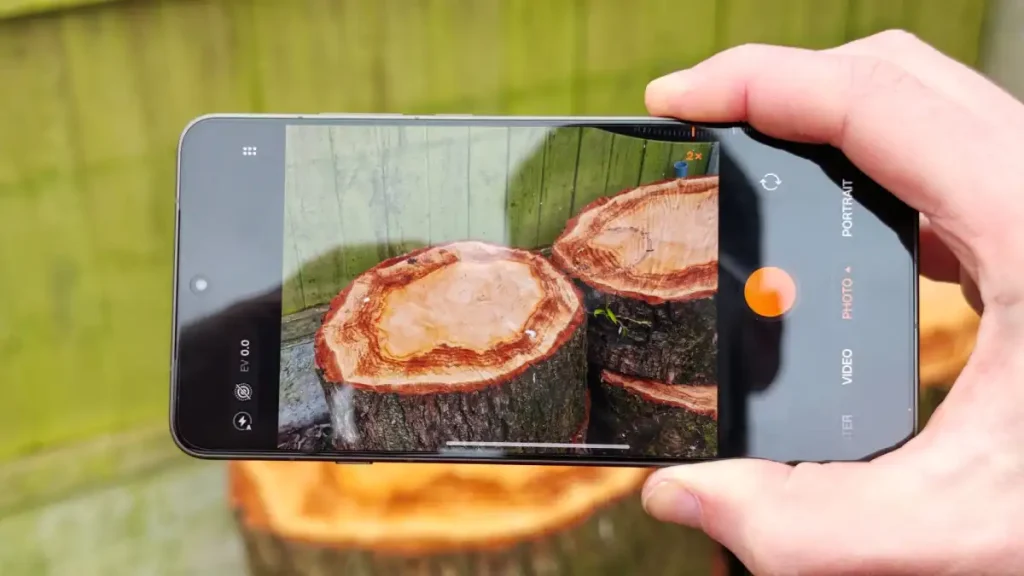
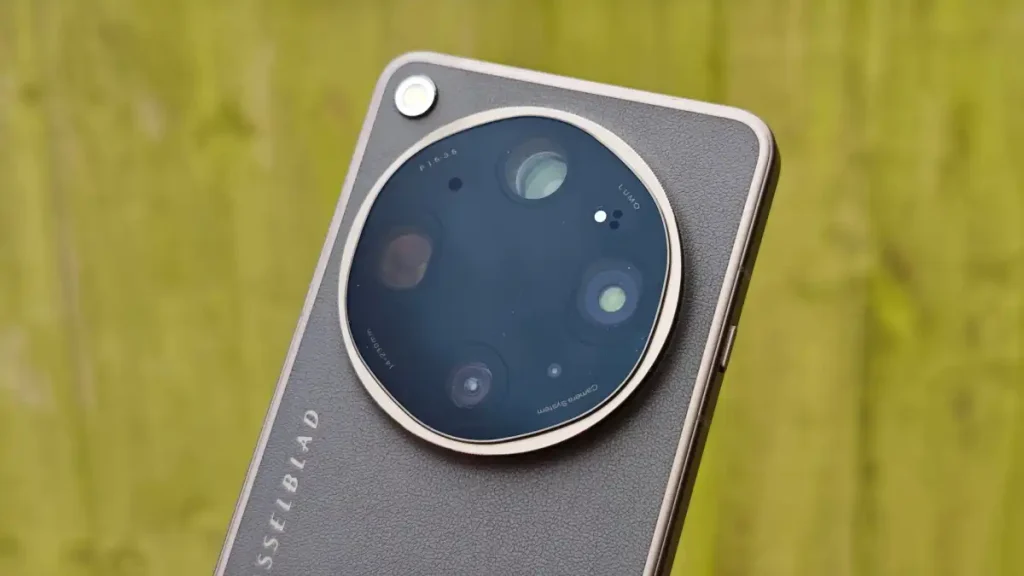
There are five cameras in all, four of which are located on the rear. That is one more than all of its main competitors in 2026. More isn’t always better, but after two months, I believe the Find X9 Ultra is the greatest camera phone this year.
Not only does it have a mind-blowing total of 550Mp across its five primary cameras (a fifth back camera serves as a colour sensor), including two 200Mp Hasselblad cameras, but it also boasts the only 10x periscope telephoto camera with a 50Mp sensor on any phone.
In short, it’s a joy to shoot with
There’s a lot – and I mean a lot – of clever and sophisticated technology here, but I’d rather not get mired down in the details and instead focus on how the X9 Ultra performs as a camera phone. The headline states that it isn’t perfect, but it’s extremely close.
In short, it’s a joy to shoot with, and I’m confident that every single camera will produce stunning photos virtually every time – even if I prefer to turn off the automated macro mode (which uses the ultrawide for close-ups).
Colour fidelity is consistent throughout, and there is a wealth of information available. The main 200Mp camera performs extremely well in low light, delivering remarkable dynamic range with minimum noise. I believe that after seeing the results, people will assume you used a proper DSLR-type camera.
I believe the camera samples speak for themselves (they are all unedited). The X9 Ultra is one of those phones that manages to capture the mood and feel of the scene you’re photographing. It’s ideal for street photography in especially, but almost anything works.
There are other modes to try, including Master Mode, which disables AI processing, Hasselblad Hi-Res for shooting at 50- or 200Mp, and X-Pan for panoramic pictures with a variety of Hasselblad filters to choose from.
It is also worth noting that the X9 Ultra is one of the greatest Android phones I have ever used for video. It can shoot at up to 8K/30fps, and all cameras can shoot at 4K/60fps. Advanced users can also use features like O-Log2 to preserve more detail.
For my money, it’s the best camera phone ever built, although I believe there are still some things that might be improved.
My primary complaint is that the Quick Button (the orange touch-sensitive button on the side) isn’t close enough to the bottom of the phone to be comfortable. In addition, I’d prefer a real shutter button, as seen on Sony Xperia smartphones. Also, as I discovered with the Xperia 17 Ultra, my finger appears in far too many shots, necessitating subsequent cropping.
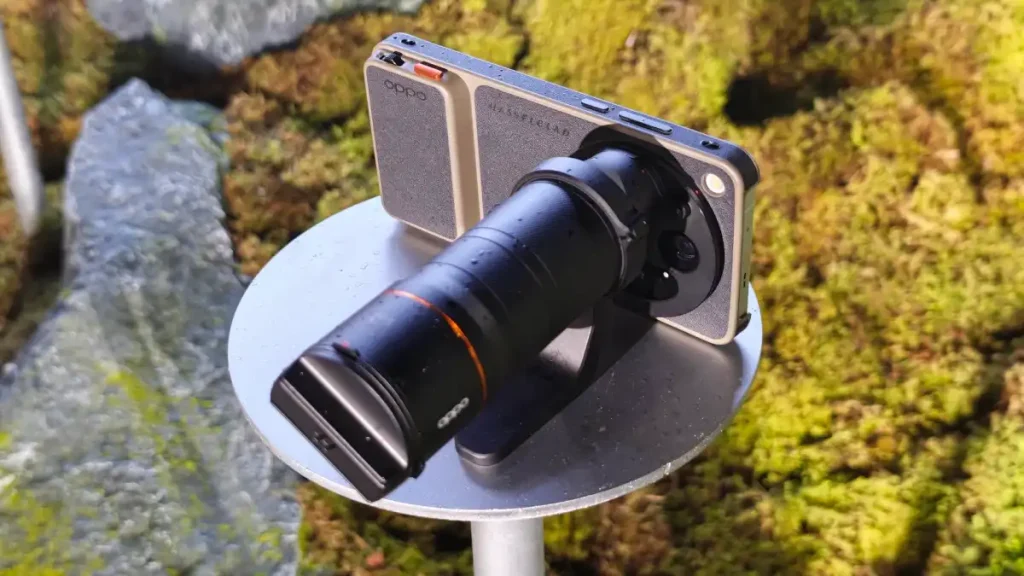
I haven’t had the opportunity to use the Earth Explorer Kit, but I’ve seen it in person, and it appears to be an interesting alternative for hobbyists. It primarily includes a camera grip (with a physical shutter button), a detachable 300mm zoom lens, and a built-in battery to keep the X9 Ultra powered on.
It’s worth contemplating, but at £499, it isn’t for the faint of heart.
Battery Life & Charging
The Find X9 Ultra continues to wow, if not brag, about its battery life and charging capabilities, beginning with a massive 7050mAh capacity. For comparison, that’s over 1000mAh more than the Xiaomi 17 Ultra and 2000mAh more than the Galaxy S26 Ultra.
This is due in part to Silicon Carbon (SiC) technology, while the Find X9 Pro has a larger battery (7500mAh). Still, the battery life is excellent, and I never have to worry about longevity when I use this phone.
It just seems to keep going like some kind of Terminator, or like my border collie
The fact that it lasted 25 hours and 36 minutes in the PCMark battery benchmark, which we put all phones through, helps to prove my thesis. That’s one of the best outcomes we’ve ever witnessed.
It’s also a good sign when I have trouble getting the phone to completely dead so that we can conduct our charging testing. Even with barely a few percent remaining and the screen brightness set to maximum, it appears to keep going like a Terminator or my Border Collie.
When I eventually got it to 0%, I saw how quickly it charged back up. The Find X9 Ultra, like other modern phones, does not come with an adaptor, but it does allow up to 100W wired charging.
I watched it hit 21% in 15 minutes and 42% in 30 minutes, which is respectable given the battery size. There’s also very fast 50W wireless charging (with reverse wired and wireless charging as needed), although it’s yet another phone released in 2026 that lacks Qi2 magnets, which is a bummer.
Overall, the Find X9 Ultra does admirably in this regard.
Software, Apps & AI
The Find X9 Ultra is powered by Oppo’s ColorOS operating system. I’m not really familiar with it, but I felt immediately at ease after switching from the Xiaomi 17 Ultra. It’s remarkably similar to HyperOS 3.
The underlying thread among these Chinese user interfaces is that they are more cleaner and easier to use than they were a few years ago, delivering fundamental Android characteristics while borrowing parts from the iPhone, most notably Dynamic Island, which provides information and controls for the selfie camera.
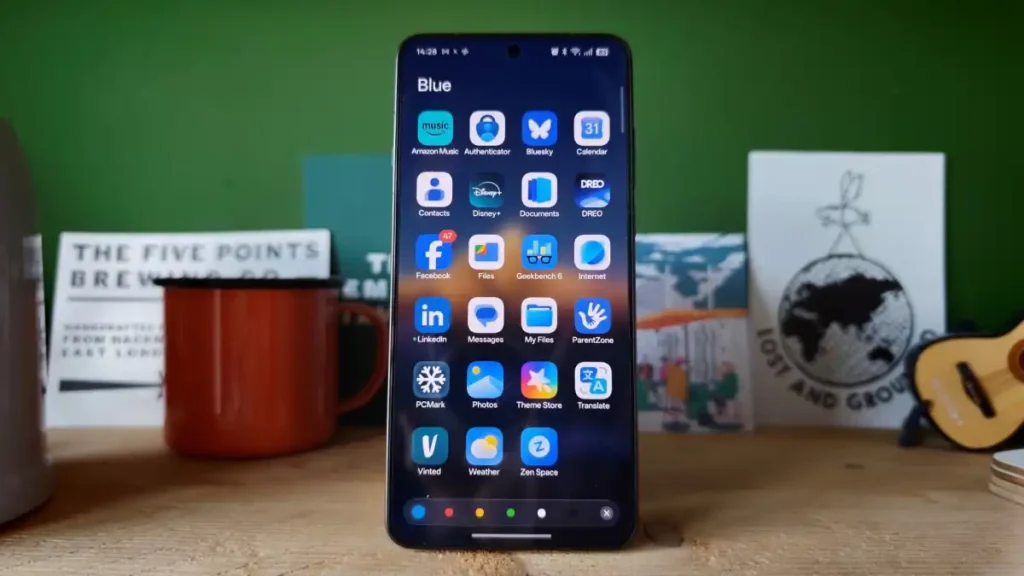
What they all have in common is an abundance of bloatware in the form of pre-installed apps. They include TikTok, Booking.com, Amazon Shopping, and many others. Some may be beneficial (for example, I did not uninstall Spotify), but they are easily removed.
Oppo also provides its own apps, some of which are duplicates of Google’s. They are, in my opinion, redundant, but you may find the odd one to your liking. Personally, I enjoy having an IR remote that allows me to control the TV with my phone.
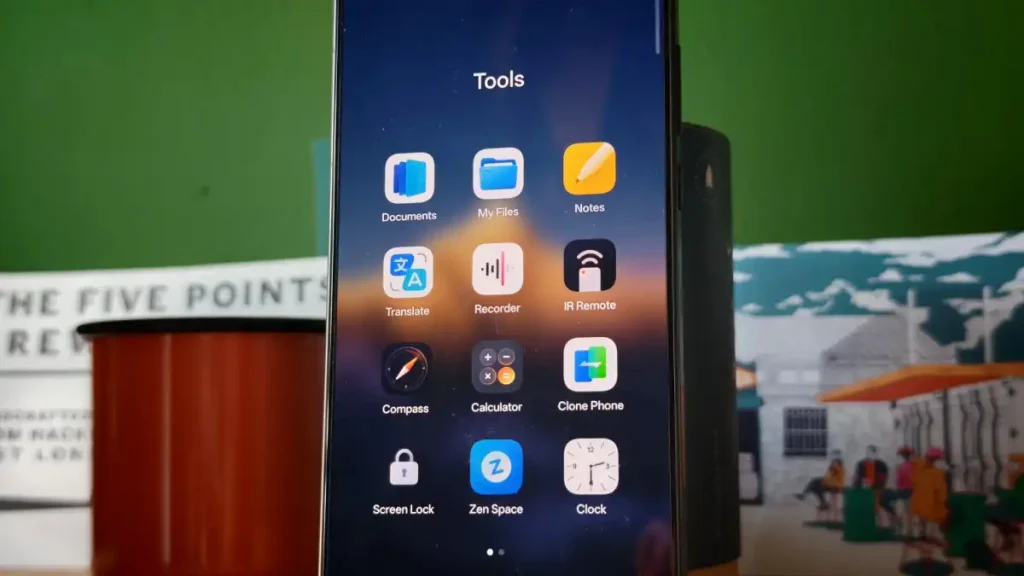
ColorOS took me longer than most to customize into a setting that I was happy with, but this is a one-time occurrence. There are things I enjoy and dislike, which may differ from your choices.
I enjoy how you can organize the app drawer by app icon color, however most notifications are way too grey, and my brain struggles to understand the information they provide.
Of course, there are several AI capabilities, the most notable of which is Mind Space, which can be accessed via the Snap Key (a physical button on the left side of the phone that may be used for other purposes if desired). You can hold the Snap Key to record a voice message, press to store on-screen material, and double-tap to open Mind space.
It does not suit me personally, thus I have not found myself automatically using it, but this does not indicate you will not. Aside from the normal aid with text, translation, and other tasks, there is little AI.
As you’d expect from a phone this costly, software support is adequate, with five years of OS updates and six for security. That is slightly behind Samsung and Google, but you may wish to upgrade by this point.
Price & Availability
The Find X9 Ultra is not a cheap phone. It costs £1,449 and is the only variant available (in the UK) with 12GB RAM and 512GB storage.
It implies it’s a purchase for individuals who care about having a phone in their pocket, as you can now buy a foldable phone for less money, as well as some quite nice mid-range phones for approximately half the cost.

