

Qualcomm’s next flagship Snapdragon chip could bring AI agents directly to your phone. The company is set to unveil its new lineup on September 22 at the annual Snapdragon Summit, and anticipation has been building for months around the Snapdragon Elite Gen 6. Now, fresh details have emerged about the chip’s new Hexagon NPU, offering the clearest look yet at what’s powering these on-device AI capabilities.
New Hexagon NPU Designed to Bring On-Device AI to Your Phone

Qualcomm today gave the first look at its new Hexagon NPU, set to power the upcoming Snapdragon 8 Gen 6 chipset. The chip is designed with on-device AI—and AI agents specifically—in mind, relying on two key upgrades to get there.
The first is a new component called the “Element Accelerator.” Despite the name, it has nothing to do with particle physics—it’s a dedicated unit that works alongside the NPU’s three other blocks: the scalar, vector, and tensor units.
Qualcomm says the Element Accelerator is built to accelerate transformer inference, which the company claims will help agents respond faster, reason more efficiently, and deliver richer experiences.
The second upgrade centers on memory. Qualcomm says the NPU’s four accelerator units—tensor, vector, scalar, and the new Element unit—now share a larger pool of memory, cutting down on how much they need to pull from the phone’s RAM.
The first 5 GHz smartphone chip
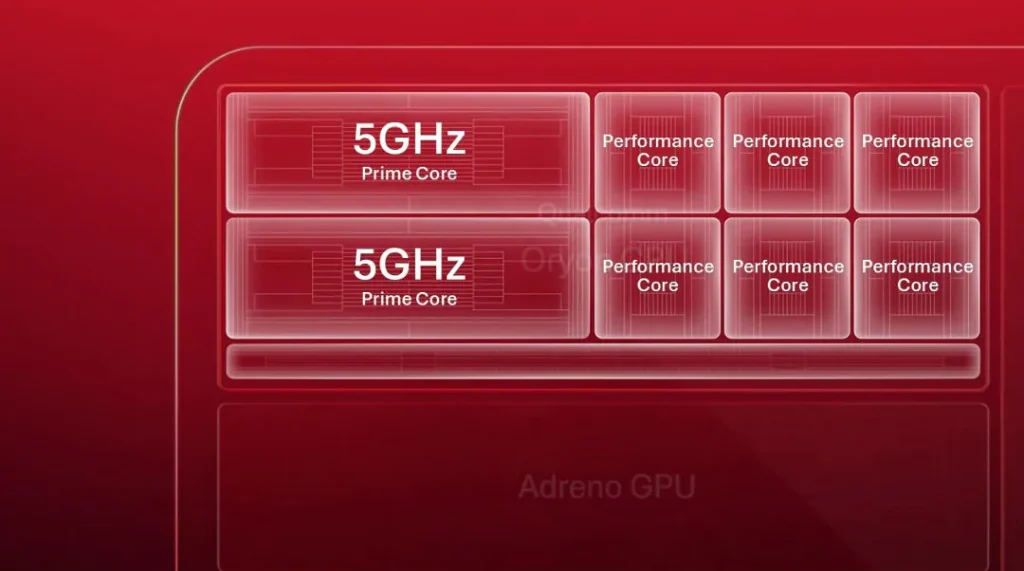
Qualcomm is also highlighting another milestone: the new Snapdragon chip is set to become the first smartphone processor to break the 5 GHz barrier. The company says this was achieved through a fully custom design rather than manufacturing refinements alone. For comparison, the Snapdragon 8 Elite Gen 5 for Galaxy tops out at 4.47 GHz.
On the graphics side, the upgraded GPU is expected to push smartphones closer to PC- and console-level gaming, thanks to improved frame-upscaling technology, faster parallel processing for complex shaders, higher throughput, and an 18 MB dedicated on-chip memory buffer.
What Is Qualcomm’s New Mixture-of-Experts Model?
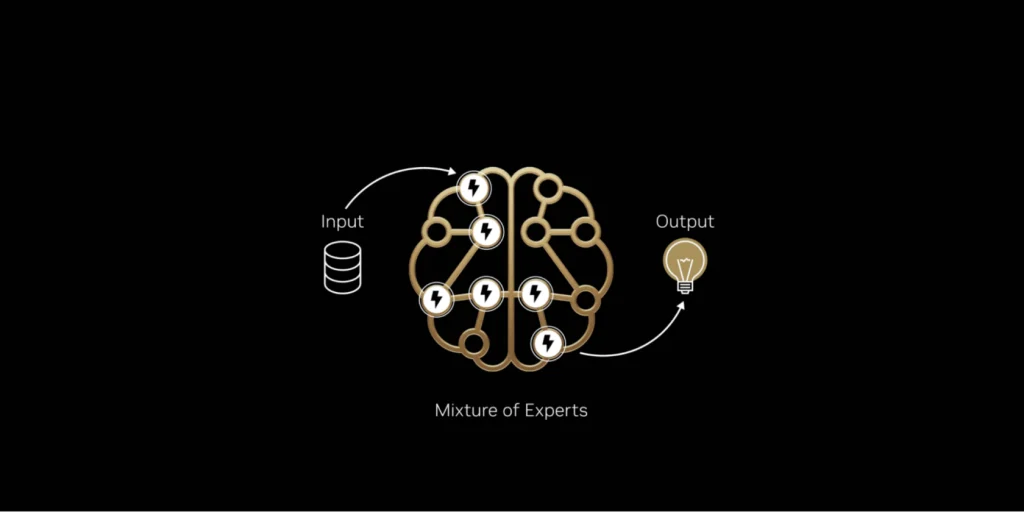
Qualcomm has introduced another complex term into the Snapdragon mix: the new chips will support AI architecture built and optimized for Mixture-of-Experts (MoE) models.
MoE is a machine learning architecture that splits a model into smaller sub-networks, or “experts,” and uses a gating mechanism to activate only the relevant subset for each query. In plain English, this means your phone’s AI will draw on a dedicated portion of the module depending on the task at hand, cutting down on compute and memory demands.
Qualcomm says this architecture will allow models with up to 30 billion parameters to run locally on-device.
The Era of On-Device AI Agents Has Arrived

Ever since ChatGPT and other LLMs started appearing on smartphones, companies have touted “on-device AI.” In reality, some features did run locally, but the moment you lost your internet connection, the cracks in that promise became obvious.
To be fair, an internet connection is still needed for the AI agent to pull fresh data and stay up to date. But keeping the heavy computing on-device means sensitive information never has to leave your phone for a server or data center.
That’s a win on two fronts: better security, and faster performance, since on-device processing cuts out network lag entirely. The Snapdragon 8 Elite Gen 6 Pro has already generated buzz thanks to leaked Geekbench scores, and early signs point to a serious powerhouse. Whether it can go toe-to-toe with Apple’s new A20 chip, though, is still an open question.